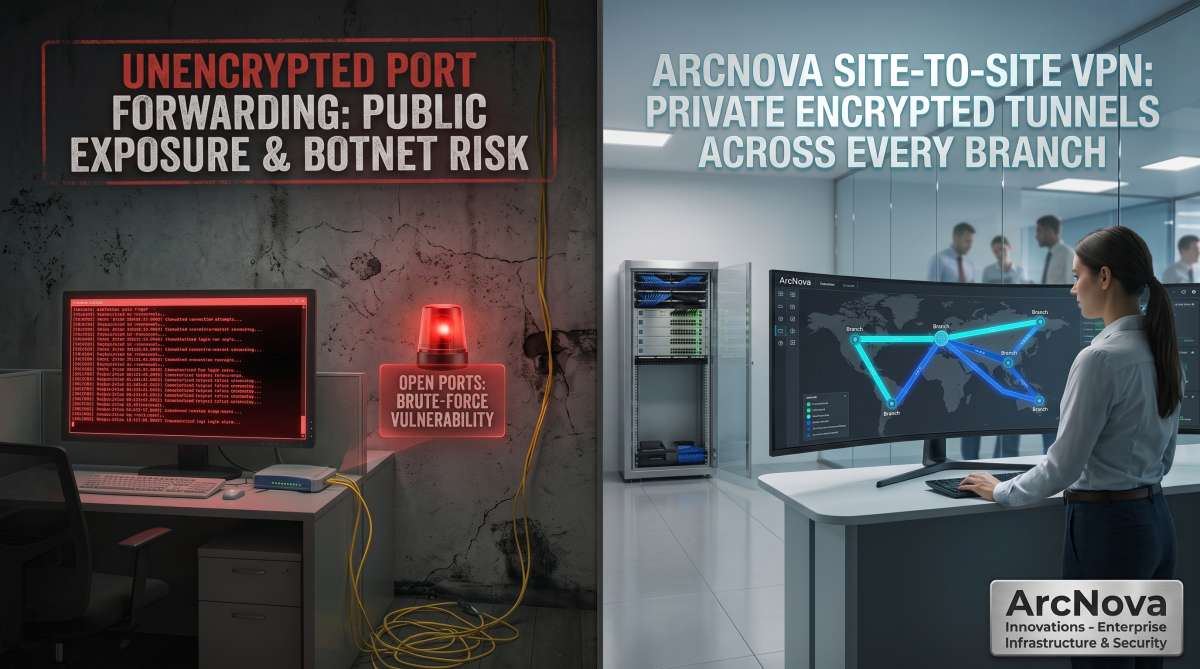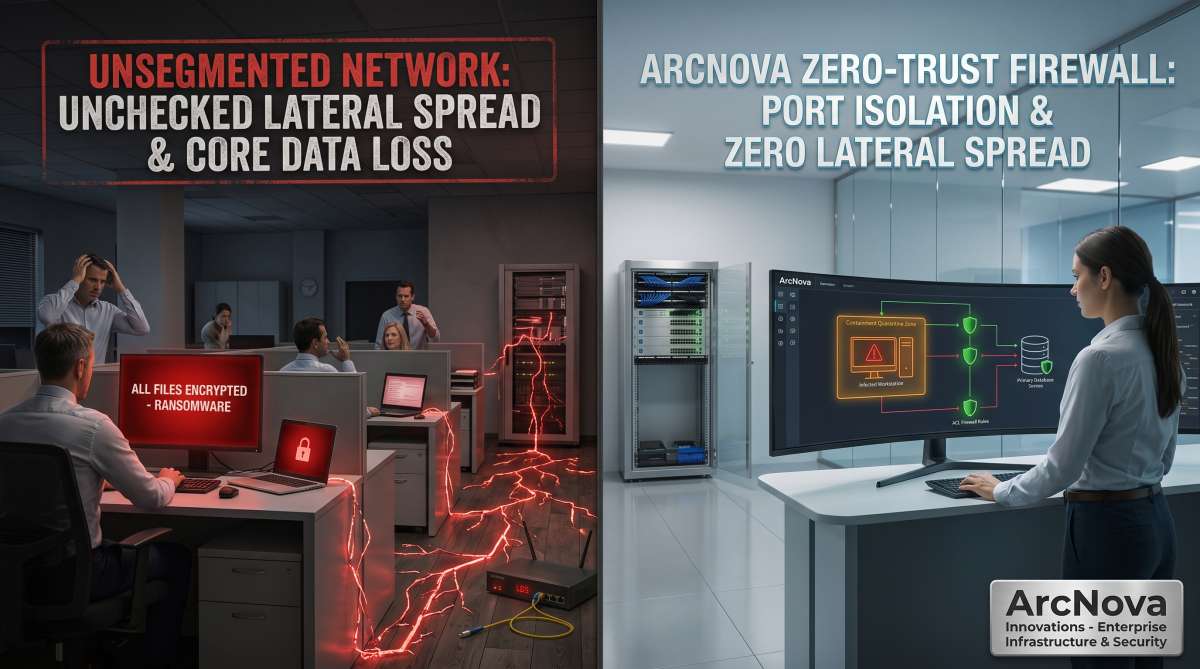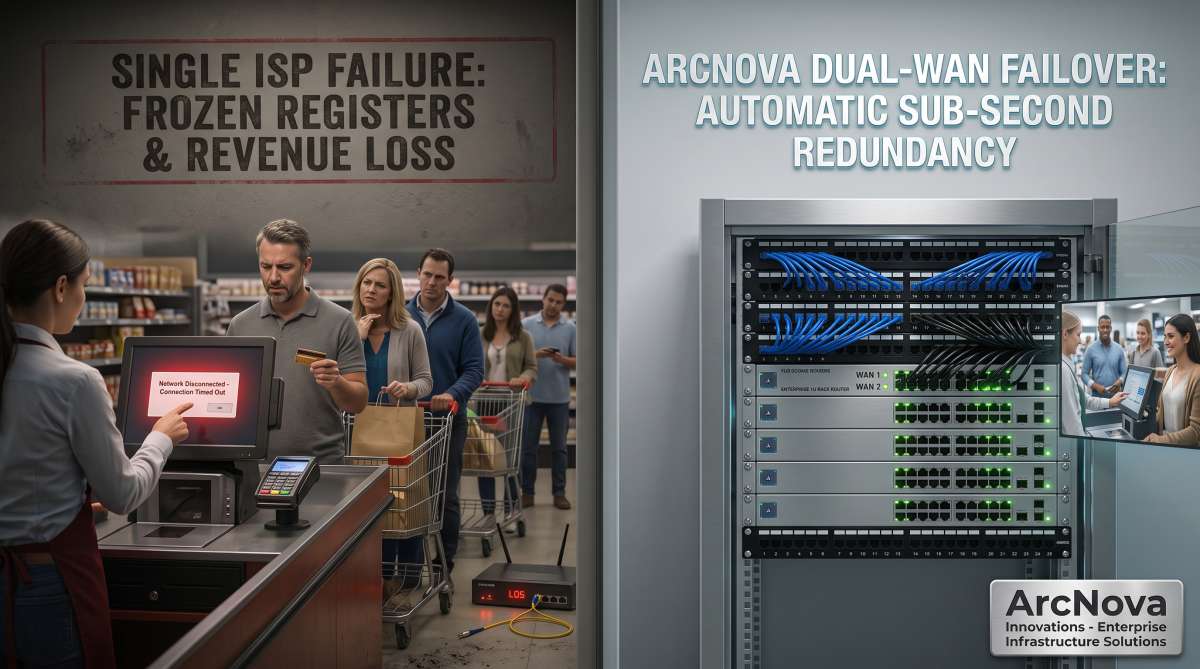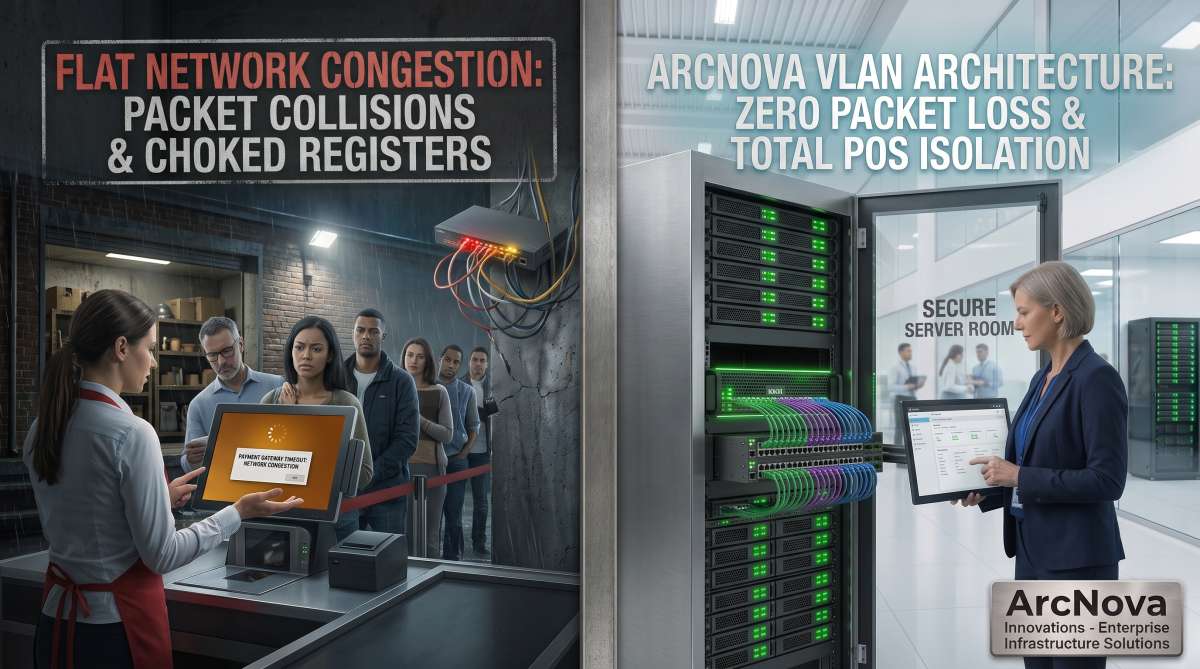
In modern commercial infrastructure—from multi-lane supermarkets and private medical facilities to restaurant chains—two systems generate continuous network activity: Point-of-Sale (POS) transaction counters and IP video surveillance cameras. POS terminals transmit lightweight, time-sensitive financial packets that must clear within milliseconds. Surveillance cameras, by contrast, pump continuous, massive streams of high-bitrate video (often 4 Mbps to 12 Mbps per 4K camera) across local wiring.
A common mistake in expanding commercial sites is running both systems across a single "flat" local area network using unmanaged plastic desktop switches. In this unsegmented setup, twenty or thirty high-definition cameras flood the entire broadcast domain. During peak store hours, heavy video chatter congests the switches, causing packet collision and high latency. Cashiers find credit card processing timing out, receipt printers freezing, and live camera feeds dropping frames precisely when store foot traffic is at its highest.
Resolving this operational conflict requires replacing flat network topologies with IEEE 802.1Q Virtual Local Area Networks (VLANs) orchestrated across enterprise managed switches.
Experiencing Sluggish POS Terminals or Dropped Camera Feeds?
ArcNova Innovations designs hardened commercial network architectures—featuring managed Layer-2/Layer-3 switch deployment, strict VLAN traffic isolation, and Quality of Service (QoS) bandwidth reservation.
Schedule an Enterprise Network Architecture Consultation →The 3 Major Breakdowns of a Flat Network Architecture
- Broadcast Storms and Packet Collisions: In an unmanaged flat network, broadcast frames sent by any single host (such as ARP requests or discovery packets from cameras) are duplicated and broadcast to every single port on the switch. High-density video streaming rapidly saturates switch backplanes, crowding out mission-critical payment authorizations.
- Severe Financial Security & Compliance Liabilities: Regulatory frameworks such as the Payment Card Industry Data Security Standard (PCI-DSS) strictly mandate that cardholder data environments (CDE) must be isolated from non-payment hardware. An unsegmented network allows an attacker who compromises an external IP camera to sniff and intercept plaintext card transactions passing across the local subnet.
- Uncontrolled Network Outage Propagation: If an outdoor IP camera suffers water ingress or an internal cable shorts out, it can trigger a broadcast loop that takes down the entire commercial network, instantly knocking POS registers, VoIP phones, and back-office servers offline.
The Architecture of Enterprise VLAN Segmentation
Implementing 802.1Q VLANs divides a single physical managed switch into multiple isolated virtual networks, ensuring complete traffic separation at Layer 2:
- VLAN 10 – POS & Financial Ledger (Mission-Critical): Dedicated solely to cashier checkout terminals, payment card readers, and receipt printers. This network is given highest Quality of Service (QoS) priority and zero access from guest devices.
- VLAN 20 – IP Surveillance & NVR (High-Bandwidth): Connects all security cameras directly to the Network Video Recorder over isolated PoE ports. Inter-VLAN firewall rules block cameras from accessing the internet or touching financial subnets.
- VLAN 30 – Corporate Management & Back-Office: Reserved for management PCs, ERP workstations, and local file storage, isolated behind secure access lists.
- VLAN 40 – Guest & Visitor Wi-Fi (Untrusted): Heavily bandwidth-throttled, client-isolated network providing basic internet access with complete isolation from internal enterprise hardware.
Unmanaged Flat Network vs. ArcNova VLAN Segmented Architecture
| Infrastructure Factor | Unmanaged Flat Network | ArcNova Managed VLAN Architecture |
|---|---|---|
| Bandwidth Contention | CCTV video streams choke register transactions | CCTV traffic contained strictly within VLAN 20 |
| POS Transaction Latency | High jitter and timeouts during peak store hours | Zero packet loss with guaranteed QoS priority |
| Security & Attack Surface | Vulnerable camera compromises entire payment LAN | Zero-trust Layer-2 isolation shields payment data |
| PCI-DSS Compliance | Non-compliant (Exposes merchant to audit fines) | Fully compliant cardholder data environment |
Guaranteeing Throughput with Quality of Service (QoS)
VLAN segmentation reaches peak effectiveness when paired with Quality of Service (QoS) queueing. On enterprise managed switches, network engineers configure priority tagging (802.1p) to ensure that even if dozens of security cameras stream intensive 4K footage simultaneously during an emergency, payment transaction packets skip to the front of the transmission queue without a millisecond of delay.
Separating heavy video feeds from critical financial processing protects your business from embarrassing checkout delays, eliminates mysterious hardware freezes, and creates an enterprise-grade digital foundation built for commercial scale.
Harden Your Commercial Network with VLAN Segmentation
Speak directly with our enterprise network engineers to audit your switches, segment camera bandwidth, and secure your POS transaction paths.
Message Our Network Engineering Team on WhatsApp