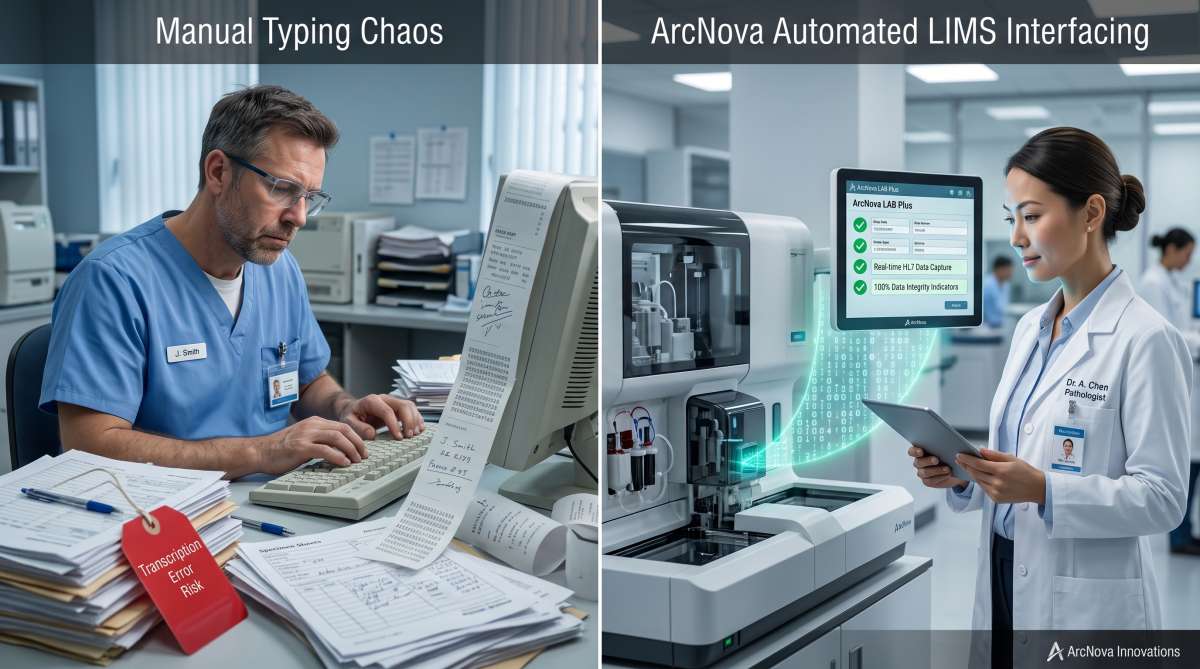
In high-volume diagnostic laboratories, automated hematology, biochemistry, and immunoassay analyzers process hundreds of patient specimens daily. These machines generate precise numeric readings in seconds. Yet in many private clinics and hospital laboratories, the reporting process remains vulnerable at a critical juncture: a laboratory technician reads values off a thermal analyzer strip, transcribes them onto a paper notepad, and manually types those numbers into a computer template.
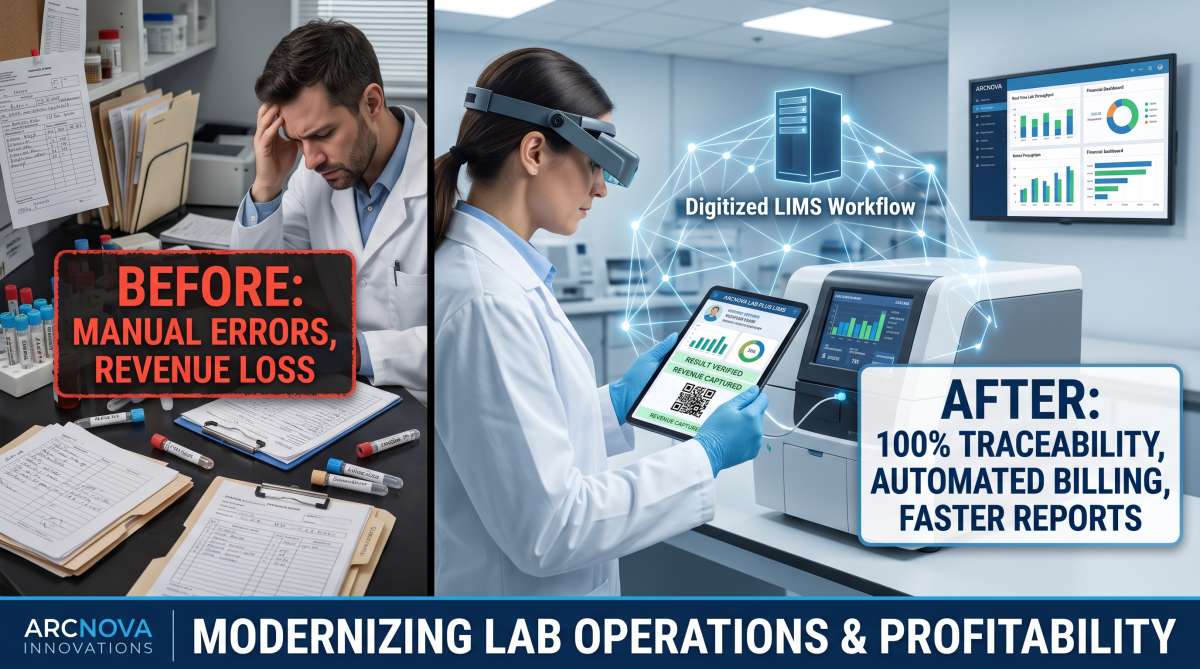
Manual transcription is a significant point of failure in clinical diagnostics. A misplaced decimal point (typing 10.2 instead of 1.02), an inverted blood glucose digit, or an accidental row skip directly impacts patient clinical decisions. Beyond diagnostic risk, manual entry introduces labor friction, requiring hours of clerical typing that delay patient report delivery.
Modern diagnostic centers solve this bottleneck through Analyzer Interfacing—establishing an automated digital bridge between clinical testing hardware and a Laboratory Information Management System (LIMS).
Automating Your Clinical Laboratory Analyzers?
ArcNova’s LAB Plus Management System supports seamless unidirectional and bidirectional interfacing with hematology, biochemistry, and electrolyte analyzers to automate diagnostic report generation.
Schedule an Analyzer Interfacing Consultation →Unidirectional vs. Bidirectional Interfacing: What’s the Difference?
Connecting diagnostic machines to software involves two primary architectural approaches depending on analyzer capabilities and workflow volume:
- Unidirectional Interfacing (One-Way Data Transfer): The technician loads the barcoded sample tube into the analyzer. Once the test sequence runs, the analyzer exports the raw test parameters over an RS-232 serial cable or TCP/IP local network socket. The LIMS listener service captures this data packet, parses the parameters, and populates the patient's electronic report form automatically.
- Bidirectional Interfacing (Two-Way Communication): The gold standard for high-throughput laboratories. When a barcoded tube is placed in the machine carousel, the analyzer reads the barcode, queries the LIMS server via HL7 or ASTM protocols ("What tests are ordered for Tube #84021?"), runs the prescribed profile, and sends the verified results back to the database with zero operator button-pressing.
The 3 Major Bottlenecks Eliminated by Interfaced Workflows
- Human Transcription & Decimal Errors: Eliminates clerical typos entirely. The exact numeric reading captured by the optical sensors inside the analyzer is transmitted to the database without manual human intervention.
- Turnaround Time (TAT) Delays: Eliminates the waiting window between test completion and report generation. As soon as the analyzer completes the test run, results are queued for pathologist sign-off instantly.
- Specimen Mix-Ups: Barcode accessioning pairs each sample tube to an internal Master Patient ID. The analyzer reads the barcode directly, preventing sample mismatch errors.
Manual Entry vs. Interfaced Diagnostic Architecture
| Diagnostic Parameter | Manual Transcription Workflow | ArcNova Interfaced LIMS Workflow |
|---|---|---|
| Data Entry Mechanism | Technician manually types values from slips | Direct digital parsing via ASTM / HL7 protocols |
| Error Probability | High (Typographical & transposition risks) | Zero transcription error rate |
| Technician Labor | 15–20 hours per week spent typing results | 100% focused on testing and QC validation |
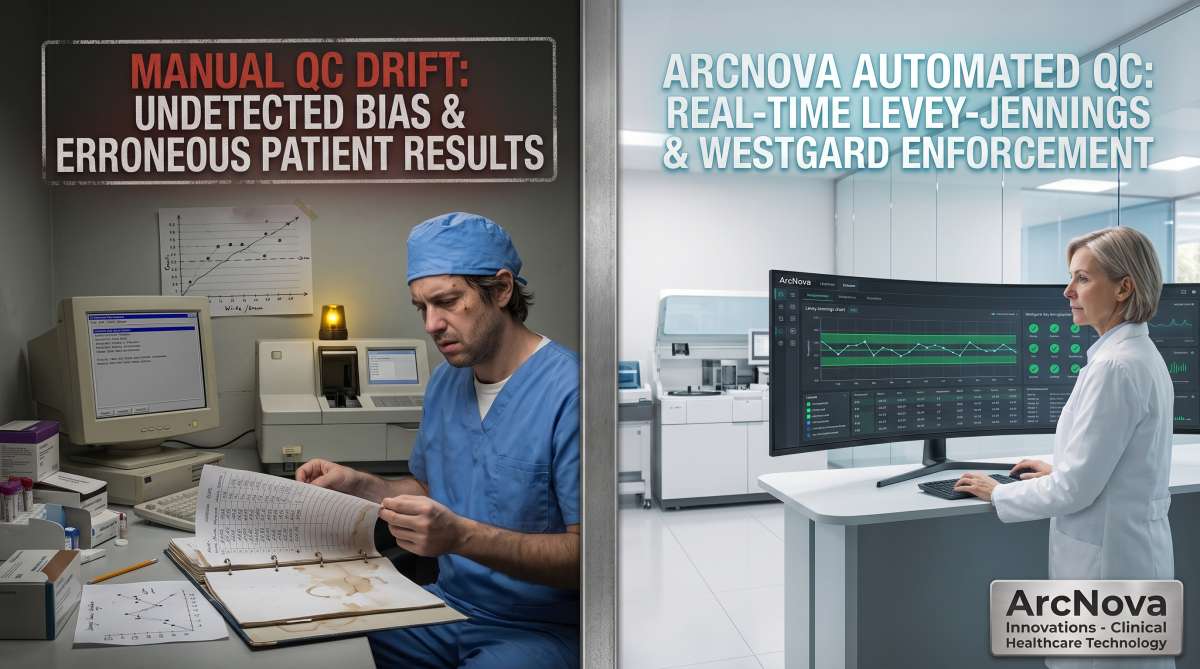
| Quality Control (QC) Tracking | Manually maintained paper logbooks | Automated Levey-Jennings and QC tracking |
Pathologist Validation & Automated Delivery
Interfacing does not bypass clinical oversight; it empowers it. Once an analyzer transmits data, the software highlights critical panic values (e.g., severe hypocalcemia or dangerously elevated troponin) in bold red warning tags. A supervising pathologist can review the profile, compare it with the patient's previous historical readings side-by-side, and approve the report with a digital signature.
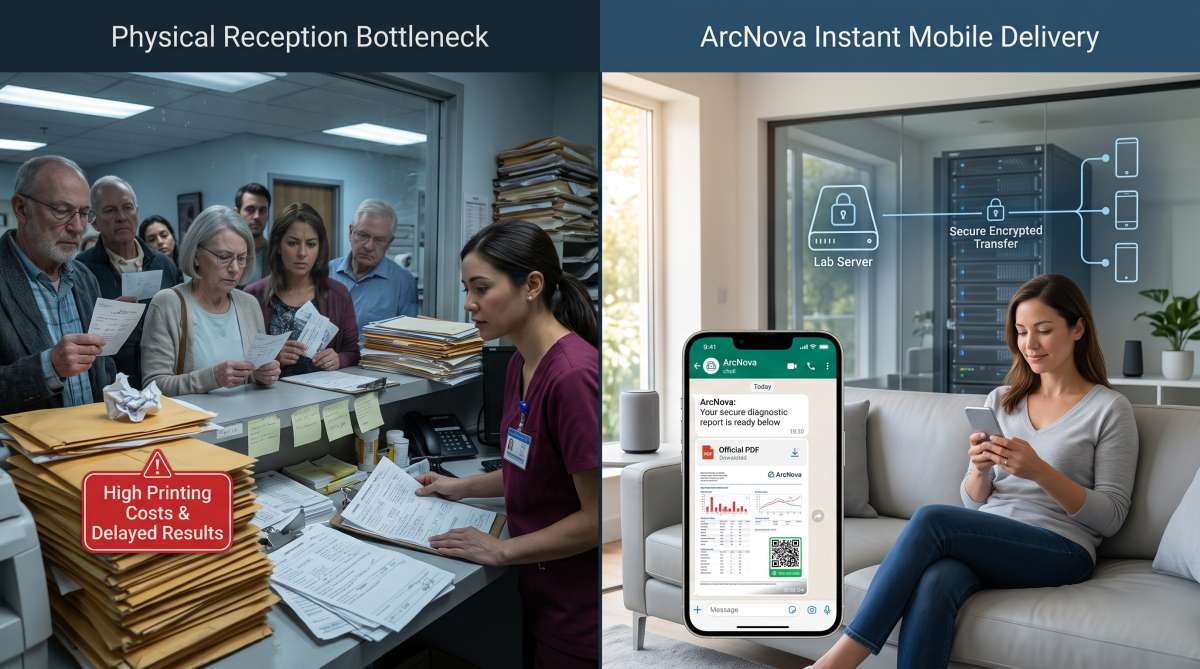
Upon digital sign-off, the report is generated as an encrypted PDF and dispatched automatically via SMS or WhatsApp to the patient, ensuring speed, accuracy, and operational efficiency.
Upgrade Your Laboratory Operations with Smart Interfacing
Connect with our laboratory IT team to integrate your biochemistry, hematology, and immunoassay analyzers with ArcNova’s LAB Plus system.
Consult with Our Health-Tech Engineers on WhatsApp