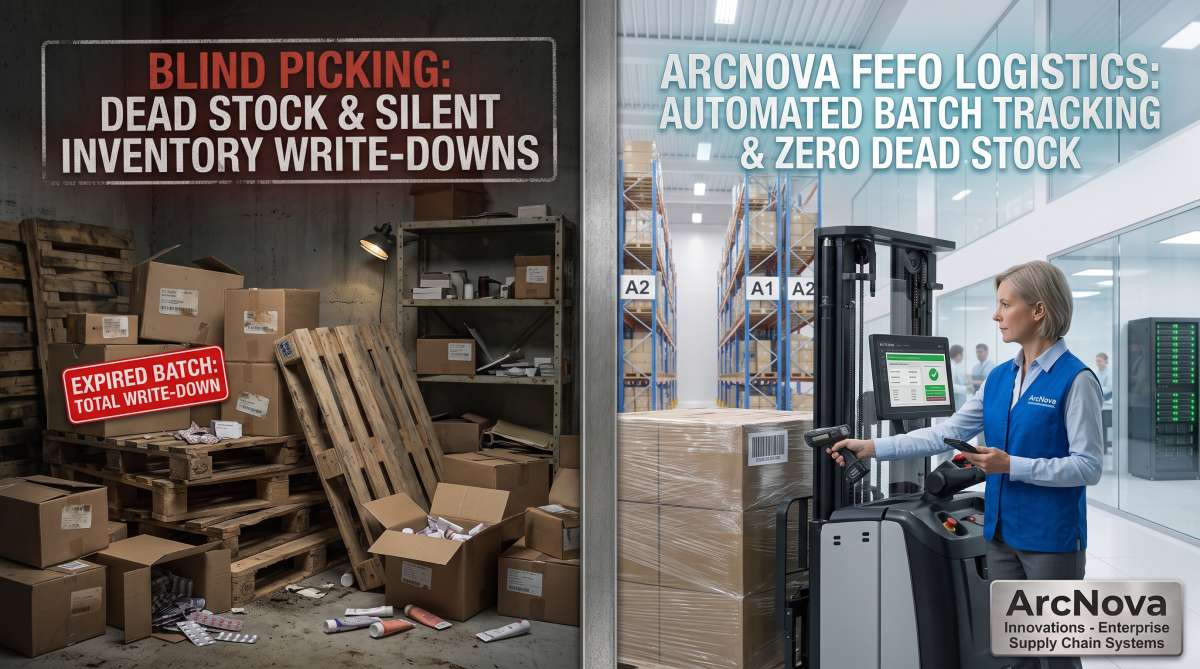
In wholesale distribution, pharmaceutical logistics, and fast-moving consumer goods (FMCG), warehouse inventory is cash sitting on physical racks. Yet in thousands of distribution hubs, this capital steadily depreciates due to a lack of granular lot control. When warehouse pickers prepare high-volume retail shipments, they naturally pull cartons from the most accessible front pallets—often leaving earlier, older product shipments buried in back racking rows.
By the time warehouse teams conduct annual stock audits or clear deep aisles, they uncover pallets of pharmaceuticals, food items, chemicals, or cosmetic products that are past their shelf life or within an unsellable 60-day expiry window. Retailers reject the goods at delivery docks, credit notes must be issued, and the distributor is forced to absorb complete inventory write-offs.
Stopping dead stock accumulation requires replacing loose warehouse picking routines with Automated Batch/Lot Serialization and FEFO (First-Expired, First-Out) Logistics managed directly by your central Enterprise Resource Planning (ERP) platform.
Stop Inventory Expiry Losses Across Your Warehouses
ArcNova’s Wholesale & Distribution ERP features automated batch number tracking, dynamic FEFO picking routes, aging stock alert dashboards, and supplier lot traceability.
Schedule an Interactive Wholesale ERP Consultation →FIFO vs. FEFO: Why First-In Isn't Good Enough
Many warehouse managers operate under standard FIFO (First-In, First-Out) logic, assuming that the stock delivered to their warehouse earliest will always expire first. In real-world distribution, this assumption regularly fails:
- Inconsistent Vendor Production Lots: A supplier might deliver a shipment produced in March, followed two weeks later by an unexpected consolidated shipment produced back in January with an earlier expiration date. Under basic FIFO, the newer stock is pushed out while the older batch sits idle.
- FEFO (First-Expired, First-Out): The system ignores warehouse arrival dates and prioritizes picking strictly by manufacturer expiration date. Regardless of when a pallet reached the receiving dock, the batch closest to expiration is systematically assigned to outgoing orders first.
The 3 Costliest Traps of Manual Lot Tracking
- Retail Delivery Rejections & Penalties: Supermarket chains and pharmacy networks strictly enforce minimum shelf-life rules (e.g., rejecting any goods with less than 75% remaining shelf life). When a distributor ships near-expiry stock by mistake, the customer returns the consignment, and the distributor absorbs double transit freight plus return penalties.
- Untraceable Product Recalls: If a manufacturer flags a contaminated batch or packaging defect, distributors using paper logs cannot easily identify which retail customers received that specific lot, turning targeted recalls into expensive, reputation-damaging crises.
- Unmonitored Aging Capital: Without automated early-warning alerts, sales teams have no idea that $20,000 worth of specialty inventory is approaching its 90-day expiry threshold—missing the opportunity to run targeted clearance promotions or return stock to the vendor.
Core Architectural Rules of ArcNova Batch & FEFO Control
An enterprise distribution platform eliminates dead stock by building batch intelligence into every step of the supply chain:
- Mandatory Lot & Expiry Capture at Receiving (GRN): Receiving clerks cannot complete a Goods Received Note without scanning or entering the manufacturer batch code, manufacturing date, and expiration date for every pallet line item.
- Dynamic Directed Picking Slips: When an order is processed, the ERP generates a warehouse pick path that instructs forklift operators to go to the exact bin location containing the lot closest to expiry, blocking pickers from scanning newer substitute lots.
- Automated 90/60/30-Day Expiry Aging Reports: The system continuously scans active bin balances, automatically highlighting aging lots in yellow and red priority tiers, giving sales reps real-time visibility to offer volume discounts before products become unsellable.
- Closed-Loop Customer Invoicing: Every printed tax invoice and dispatch challan itemizes the exact batch number alongside the SKU description, protecting the business from fraudulent returns of expired goods purchased elsewhere.
Manual Warehouse Tracking vs. ArcNova FEFO Architecture
| Distribution Metric | Manual Bin & Paper Tracking | ArcNova Automated FEFO Module |
|---|---|---|
| Picking Priority | Convenience-based (Pickers grab front pallets) | Strict algorithm-driven FEFO sequence |
| Expiry Visibility | Hidden until manual counts or customer rejections | Continuous live dashboard with automated aging tiers |
| Recall Execution | Days spent digging through filing cabinets | Sub-second batch traceability across all invoices |
| Dead Stock Write-Downs | High (3% to 7% of total annual inventory value) | Near-zero unmonitored expiration losses |
Turning Warehouse Discipline into Working Capital
Working capital in distribution is directly tied to inventory velocity. Allowing high-value cartons to sit untouched in dark warehouse corners while newer stock turns over drains cash and artificially inflates holding costs.
Implementing strict batch expiry tracking and FEFO picking protocols transforms your distribution warehouse into a disciplined, high-velocity asset—ensuring every product unit is accounted for, shipped on time, and converted into cash flow.
Protect Your Distribution Margins from Expiry Losses
Speak directly with our supply chain engineers to explore how ArcNova’s Batch Tracking and FEFO Picking engine eliminates inventory write-offs across your warehouses.
Message Our Wholesale ERP Team on WhatsApp